
In this article
Why timing matters
Puppies go through a sensitive period when they learn quickly what is safe and normal. The AVSAB position statement on puppy socialization describes the first three months of life as the primary window for socialization, and states that behavioral issues, not infectious diseases, are the number one cause of death for dogs under three years of age — and that behavior problems are the top reason dogs are surrendered to shelters.
That is why the AVSAB says it should be the standard of care for puppies to receive socialization before they are fully vaccinated.
Balancing socialization and disease risk
The AVSAB guidance is practical:
- puppies can start classes as early as seven to eight weeks;
- they should have at least one set of vaccines at least seven days before the first class, plus a first deworming;
- vaccines should stay up to date through the class series.
Ask your veterinarian about local disease risks. Until the vaccine series is done, avoid places with unknown dogs and their waste, such as dog parks and pet store floors, but keep inviting healthy, vaccinated adult dogs and people to your home.
What “positive experience” means
Socialization is not throwing a puppy into everything. It is letting the puppy explore at its own pace and making each encounter pleasant. A puppy that hides under a chair at a party is not being socialized; it is being frightened.
Watch for stress signals: tail tucked, ears back, yawning, lip licking, freezing, trying to leave. When you see them, add distance or end the session.
A socialization checklist
| Category | Examples |
|---|---|
| People | Men, women, children (supervised), people with hats, beards, glasses, uniforms, wheelchairs |
| Animals | Calm vaccinated adult dogs, cats, other pets |
| Surfaces | Grass, tile, gravel, metal grates, stairs, a wobbly cushion |
| Sounds | Vacuum, doorbell, traffic, thunder recordings at low volume |
| Places | Car rides, a friend’s house, the outside of the vet clinic, quiet streets |
| Handling | Touching paws, ears, mouth; brushing; a towel wrap; being lifted |
| Objects | Umbrellas, bikes, strollers, bags, boxes |
Aim for a few new things every day, always at a level the puppy enjoys.
How to run a session
- Start at a distance where the puppy notices the new thing but stays relaxed.
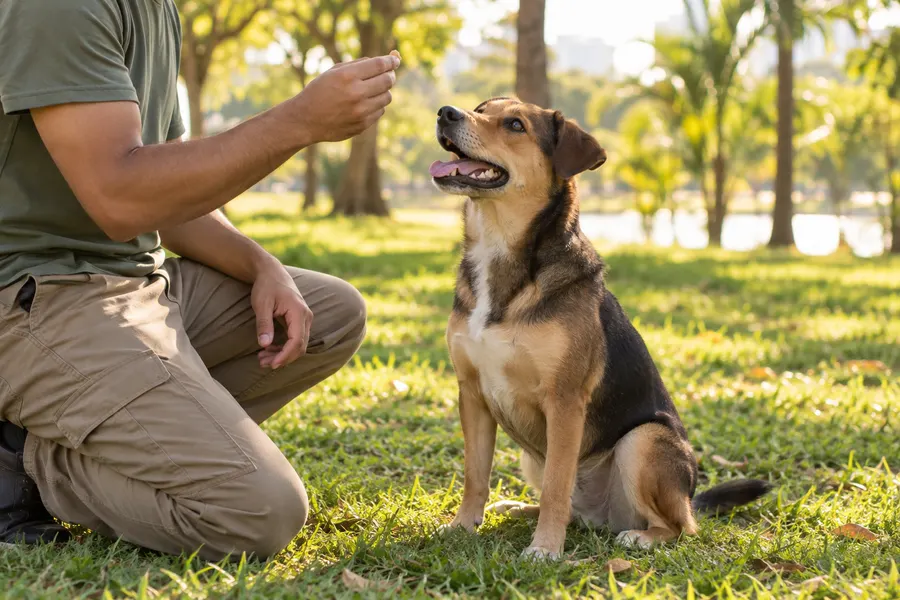
- Pair it with treats or play. The new thing predicts good stuff.
- Let the puppy choose to approach. Never drag or carry the puppy right up to something scary.
- Keep it short. A few minutes is enough.
- End on a good note and try again another day.
Choosing a puppy class
A good class:
- is run by a trainer who uses reward-based methods, consistent with the AVSAB position on humane training;
- checks vaccination records and cleans the floor between classes;
- groups puppies by age and size and supervises play closely;
- includes handling exercises and short training sessions, not just free play;
- lets shy puppies watch from a safe spot.
Walk out of any class that uses leash jerks, scruff shakes, spray bottles or “let them work it out” rough play.
Handling practice for vet and grooming visits
Gentle daily handling makes future exams, nail trims and baths much easier. Touch an ear, give a treat. Lift a paw, give a treat. Open the mouth briefly, give a treat. Many clinics welcome “happy visits” where a puppy just comes in, gets treats from staff and leaves.
Common mistakes
- Waiting until all vaccines are done and missing the window.
- Flooding the puppy with too much at once.
- Only socializing with the family’s own people and dogs.
- Letting rough play with an older dog frighten the puppy.
- Stopping socialization after the first months — keep it going through adolescence.
Next: positive reinforcement basics and how to teach a dog to sit.
 Guide · $15The 30-Day Puppy Training Plan
 Recommended online courseTrain your dog with reward-based gamesGuide · $15The 30-Day Puppy Training PlanDay-by-day 30-day plan with reward-based training, socialization, house training and printable routines and trackers.Buy now →
Frequently asked questions
Is it safe to socialize a puppy before all vaccines?
The AVSAB considers well-run puppy classes appropriate before vaccination is complete, as long as the puppy has had at least one set of vaccines seven days before class and a first deworming. Avoid dog parks and areas with unknown dogs until your veterinarian says otherwise.
Is it too late to socialize an older puppy or adult dog?
Dogs keep learning all their lives, but the sensitive period makes early socialization especially powerful. Older dogs can still become more comfortable with gradual, positive exposure, often with the help of a reward-based trainer.
My puppy seems scared of something. Should I push through?
No. Forcing a frightened puppy closer can make the fear worse. Increase distance, let the puppy observe from where it feels safe, pair the experience with treats and try again later at an easier level.