
In this article
The idea in one paragraph
Dogs repeat what pays off. Positive reinforcement uses that fact deliberately: when the dog does something you like, something good follows, and the behavior becomes more likely. The AVSAB position statement on humane dog training concludes that reward-based training should be used for teaching all dogs and for treating behavior problems, and that aversive methods should not be used.
Why veterinary behaviorists recommend it
AVSAB reviewed research comparing training methods. The statement reports that aversive methods — leash jerks, shock collars, prong or choke collars, physical intimidation — are associated with signs of stress, fear and aggression, and that reward-based methods are at least as effective without those risks. It also states there is no evidence that aversive training is necessary for dog training or behavior modification. The RSPCA gives owners the same advice: reward the behavior you want and avoid punishment.
The four ingredients
1. Rewards the dog actually wants
What counts as a reward is the dog’s choice, not yours. Rank your dog’s rewards:
| Value | Examples | Use it for |
|---|---|---|
| Low | Kibble, calm praise | Easy behaviors at home |
| Medium | Commercial soft treats, a quick game | New behaviors in quiet places |
| High | Chicken, cheese, a favorite toy | Hard behaviors, distractions, recall |
Use pea-sized pieces and count them in the dog’s daily food intake.
2. Timing
The reward has to arrive within a second or two of the behavior, or the dog connects it with whatever happened in between. That is where a marker helps: a clicker or a short word such as “yes” said at the exact moment of the behavior, followed by the treat.
3. Small steps
Break behaviors into pieces the dog can succeed at. For a long “stay”, reward one second, then two, then five — not thirty seconds on day one.
4. Short, frequent sessions
Three to five minutes, a few times a day, beats one long lesson. Stop while the dog is still keen.
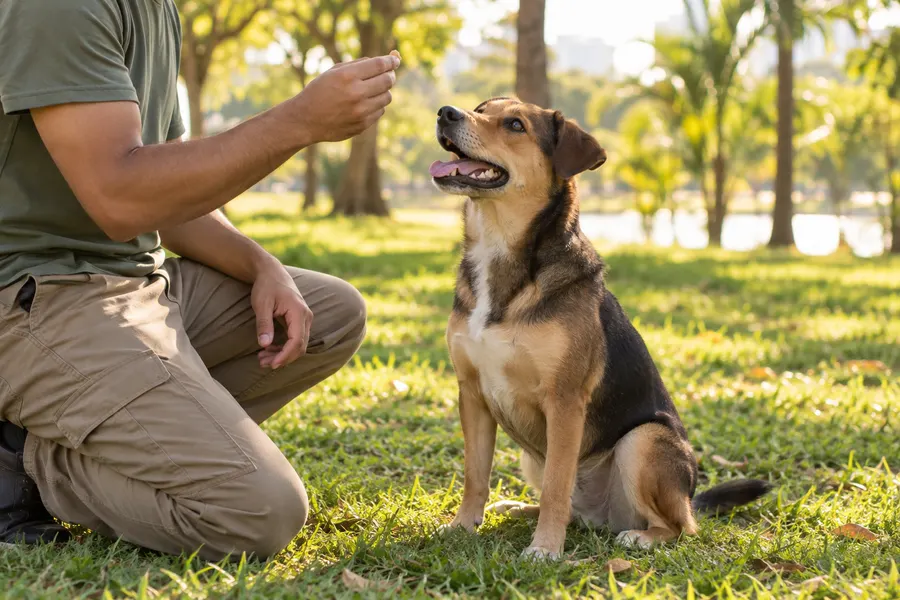
A simple example: teaching “touch”
- Hold your open hand a few inches from the dog’s nose.
- The moment the nose touches your palm, say “yes” and give a treat.
- Repeat five to ten times, then add the word “touch” just before presenting your hand.
- Gradually move your hand farther away or to the side.
Within a few sessions most dogs will cross the room to touch your hand — a useful way to move a dog without pulling on the collar.
Dealing with unwanted behavior
Positive reinforcement does not mean ignoring problems. Instead of punishment, use:
- Management: stop rehearsal of the problem. Put shoes away, use baby gates, walk at quiet times.
- Teach an alternative: a dog cannot jump on guests while sitting. Reward sit at the door.
- Remove the reward for the problem: jumping for attention stops working if attention only comes when four paws are on the floor.
- Calm interruption: a neutral sound to redirect, followed by something to do.
Fading treats
Once a behavior is reliable in several places:
- Ask for it and reward only some repetitions — the best ones.
- Switch to “life rewards”: a door opening, a ball thrown, sniffing time on a walk.
- Keep paying occasionally for important behaviors like recall. Coming when called around distractions should always be worth it.
Common mistakes
- Rewarding too late and accidentally rewarding something else.
- Using treats as bribes, showing food before the behavior instead of after it.
- Moving too fast to hard places like parks before the dog can do it at home.
- Repeating the cue — “sit, sit, SIT” teaches the dog to wait for the third time.
- Mixing methods, rewarding one minute and jerking the leash the next, which confuses the dog.
When to get help
If your dog shows fear, aggression or anxiety, or a behavior changes suddenly, start with a veterinary exam: pain and illness can drive behavior. Then look for a trainer who uses reward-based methods, or a veterinary behaviorist for serious cases. See how to choose a dog trainer and how to teach a dog to sit.
 Guide · $15The 30-Day Puppy Training Plan
 Recommended online courseTrain your dog with reward-based gamesGuide · $15The 30-Day Puppy Training PlanDay-by-day 30-day plan with reward-based training, socialization, house training and printable routines and trackers.Buy now →
Frequently asked questions
Will my dog only obey if I have treats?
Not if you fade food rewards correctly. Once a behavior is reliable, reward it intermittently and mix in other rewards such as play, praise and access to things the dog wants, like going outside or greeting a friend.
Does positive reinforcement mean never saying no?
No. Reward-based training still sets limits. Instead of punishing, you prevent unwanted behavior through management, interrupt it calmly and show the dog what to do instead, then reward that.
Does positive reinforcement work for aggressive dogs?
Reward-based methods are what veterinary behavior organizations recommend, but aggression needs a professional plan. Start with a veterinary exam to rule out pain, then work with a qualified behavior professional.