
In this article
- The four rules of puppy potty training
- Puppy potty training schedule (sample day)
- The 7-day plan
- How long can a puppy hold it?
- How to handle accidents
- Pee pads, apartments and bad weather
- When it is not a training problem
- Common potty training mistakes
- Potty training a puppy in an apartment
- Potty training an adult or rescue dog
- Your potty training log
- Checklist: is my puppy potty trained?
- Build on the routine
House training is the first big project with a new puppy, and the one that shapes your days the most. The good news is that it follows a simple rule: make it easy for the puppy to go in the right place, reward it every time, and prevent mistakes the rest of the time. This plan gives you a seven-day start, a sample schedule and answers to the problems that come up most.
The four rules of puppy potty training
The Humane World for Animals guide to potty training (formerly the Humane Society of the United States) and the AVSAB position on humane training agree on the fundamentals:
- Go out often. At least every two hours, and right after waking, play, eating and drinking.
- Same spot, on a leash. The smell of previous visits helps the puppy go.
- Reward immediately. Praise or a treat the moment they finish — outside.
- No punishment. It teaches fear, not where to go.
Puppy potty training schedule (sample day)
Adjust the times to your household. The point is predictability.
| Time | What happens |
|---|---|
| 6:30 a.m. | Wake up → straight outside |
| 7:00 | Breakfast → outside 10–20 minutes later |
| 7:30–9:00 | Play and short training → outside after play |
| 9:00 | Nap in crate → outside on waking |
| 11:00 | Outside |
| 12:00 p.m. | Lunch → outside |
| 2:00 | Outside after nap |
| 4:00 | Outside |
| 5:30 | Dinner → outside |
| 7:00 | Play → outside |
| 8:30 | Remove water (about 2.5 hours before bed) |
| 10:30 | Last trip out → bed |
| Night | One quiet trip if the puppy wakes and whines |
A consistent feeding schedule makes elimination predictable. Free-feeding makes it guesswork.
The 7-day plan
Day 1 — set up. Choose a potty spot, a cue phrase and a confinement area (crate or a small room with baby gates). Buy an enzymatic cleaner; ordinary cleaners leave odors that invite repeat accidents.
Day 2 — start the clock. Follow the schedule above. Write every trip and every accident on a simple log.
Day 3 — perfect your timing. Reward within a second or two of the puppy finishing. Waiting until you are back inside rewards walking to the door, not going potty. Wait until they are completely done; interrupting midway can leave a puppy with a half-full bladder.
Day 4 — supervise or confine. Indoors, keep the puppy in sight or tethered to you with a six-foot leash. When you cannot watch, use the crate. See our night-by-night crate training schedule.
Day 5 — read the signals. Barking or scratching at the door, sniffing the floor, circling, restlessness or a sudden squat mean “now”. Pick the puppy up or lead them out right away.
Day 6 — fix the nights. Remove water about two and a half hours before bed. Night trips are boring on purpose: out, potty, back to bed.
Day 7 — read your log. Most accidents cluster at predictable times. Move a trip 15 minutes earlier and you prevent them.
How long can a puppy hold it?
Puppies have small bladders and limited control. Humane World for Animals advises that puppies under six months should not stay in a crate for more than three or four hours at a time, because they physically cannot hold it longer. If you work long days, arrange a pet sitter or neighbor for midday breaks.
How to handle accidents
- If you catch the puppy in the act, interrupt calmly (a light clap or “outside!”) and take them to the spot. Reward if they finish there.
- If you find an accident later, just clean it. The puppy cannot connect your reaction to something done minutes ago.
- Never scold, rub their nose in it or use punishment. Fear makes puppies hide to eliminate, behind furniture or in another room.
- Clean with an enzymatic product to remove the odor completely.
Pee pads, apartments and bad weather
Indoor options — pee pads, a sod box or a balcony patch — are useful when nobody can let the puppy out. They do teach that going indoors is acceptable, so outdoor training may take longer later. Put the pad in one place, praise use of it, and move it gradually toward the door if you plan to switch to outdoors.
When it is not a training problem
If a puppy that was progressing starts having frequent accidents, drinks much more than usual, strains or has diarrhea, see your veterinarian. The Merck Veterinary Manual notes that house soiling can have medical causes, which must be ruled out before treating it as a behavior problem. Fear, excitement and marking are also different problems with different fixes.
Common potty training mistakes
| Mistake | Why it backfires | What to do instead |
|---|---|---|
| Giving too much freedom too soon | The puppy finds hidden spots to go | Expand space one room at a time |
| Rewarding inside after the trip | The puppy links the treat to coming in | Reward outside, the moment they finish |
| Long trips with play first | Puppy forgets why it is outside | Potty first, then play as a bonus |
| Cleaning with ammonia products | Smells like urine to a dog | Use an enzymatic cleaner |
| Punishing accidents | Teaches the puppy to hide | Interrupt calmly and take outside |
| Inconsistent schedule across family members | Puppy cannot predict when it goes out | Post the schedule on the fridge |
Potty training a puppy in an apartment
Apartments add elevators, hallways and stairs between the puppy and the grass. A few adjustments help:
- carry young puppies to the exit to avoid accidents on the way;
- keep a leash, treats and bags by the door so trips take seconds to start;
- choose one patch of grass near the building as the potty spot;
- if you rely on pads at first, keep them in one place and reward their use;
- plan midday breaks with a neighbor or dog walker if you work away from home.
Potty training an adult or rescue dog
Adult dogs can be house trained with the same method: frequent trips, rewards outside and supervision indoors. Many learn faster than puppies because they have more bladder control. Rescue dogs that lived in kennels may never have learned to go outside on a leash, so be patient for the first weeks, and expect some accidents from stress in a new home.
Your potty training log
Write each entry with the time, what happened and where. After a few days, patterns appear.
| Time | Event (woke, ate, played) | Went outside? | Pee / poop | Accident inside? |
|---|---|---|---|---|
| 6:30 | Woke | Yes | Pee | No |
| 7:20 | 20 min after breakfast | Yes | Poop | No |
| 9:10 | Woke from nap | No — missed | — | Yes, kitchen |
That third row tells you to schedule a trip right after naps. The 30-Day Puppy Training Plan includes a printable house-training log.
Checklist: is my puppy potty trained?
- No accidents for several weeks in a row
- Goes to the door or signals when it needs to go out
- Holds it through the night
- Goes on cue in the usual spot
- Stays accident-free with access to more of the house
Until you can tick every box, keep supervision and the schedule in place.
Build on the routine
Potty training is easier when the rest of the day is structured: short training sessions, chew toys and naps. Our puppy training schedule by age shows what to teach from 8 weeks to 6 months, and positive reinforcement dog training explains why rewards work. For a printable plan with a house-training log, see The 30-Day Puppy Training Plan. More in the dog training guide.
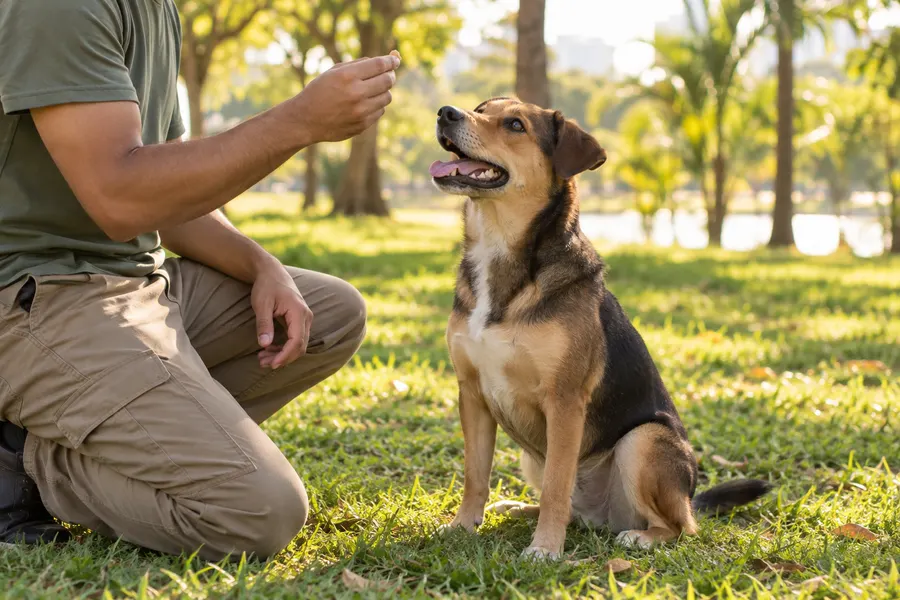
If you want structured games to keep a young dog’s mind busy between potty trips, the online course Brain Training for Dogs, below, uses reward-based exercises you can do at home.
 Guide · $15The 30-Day Puppy Training Plan
 Recommended online courseTrain your dog with reward-based gamesGuide · $15The 30-Day Puppy Training PlanDay-by-day 30-day plan with reward-based training, socialization, house training and printable routines and trackers.Buy now →
Frequently asked questions
How long does it take to potty train a puppy?
A consistent first week sets the routine, but most puppies need several weeks to a few months to be reliable, depending on age, breed size and how consistent the household is. Small breeds often take longer. Expect occasional accidents until around six months.
How often should I take my puppy out?
At least every two hours during the day, plus immediately after waking up, after play, and after eating or drinking, according to Humane World for Animals. Very young puppies may need to go even more often.
Should I punish my puppy for accidents?
No. Scolding or rubbing a puppy's nose in it makes them afraid to eliminate in front of you and slows training. Interrupt calmly if you catch them in the act, take them outside, reward if they finish there and clean the spot with an enzymatic cleaner.
Are pee pads a good idea?
They help if nobody can let the puppy out during long workdays, but they teach the puppy that going indoors is acceptable, which can make outdoor training take longer. If you use them, keep them in one spot and move toward the door gradually.
What if my puppy keeps having accidents after months of training?
See your veterinarian. Urinary tract infections, intestinal parasites and other medical problems can cause frequent accidents, and the Merck Veterinary Manual recommends ruling out medical causes before treating house soiling as a behavior problem.
How do I potty train a puppy at night?
Remove water about two and a half hours before bedtime, take the puppy out right before bed, and keep the crate near you so you hear them wake. Take them out quietly and go straight back to bed — no play. Many puppies can sleep about seven hours without a break.
Sources
- How to potty train your dog or puppy↗
- Crate training 101↗
- Position Statement on Humane Dog Training (2021) — AVSAB: métodos basados en recompensa y riesgos de los métodos aversivos↗