Topic
Dog grooming: skills, safety and how to get started
Quick answer
Dog grooming is the routine care of a dog's coat, skin, nails and ears: brushing, bathing, drying, trimming and checking for problems. At home, most dogs need regular brushing and an occasional bath with a dog shampoo. As a career, the BLS notes most groomers learn on the job under an experienced groomer, while grooming schools are an alternative route. Safe handling matters more than fancy cuts.
Articles on this topic
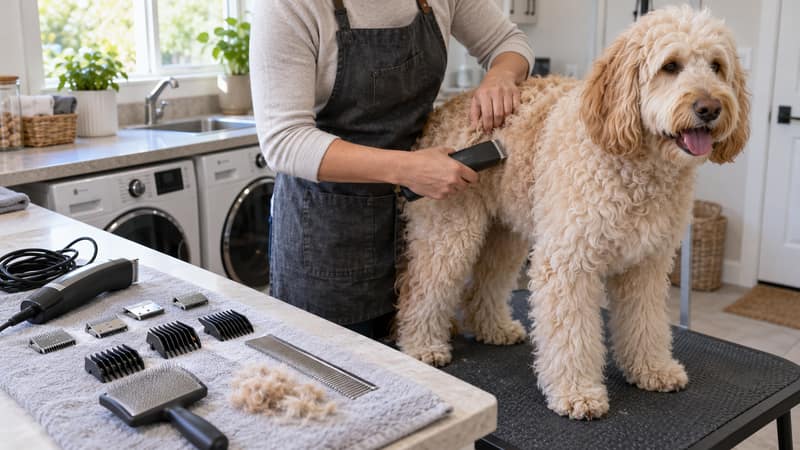 Buying guideBest dog clippers for home use: how to choose by coatHow to choose the best dog grooming clippers for home use — motor, blades, guard combs, cordless vs corded — and what works for doodles, poodles and mats.Read article
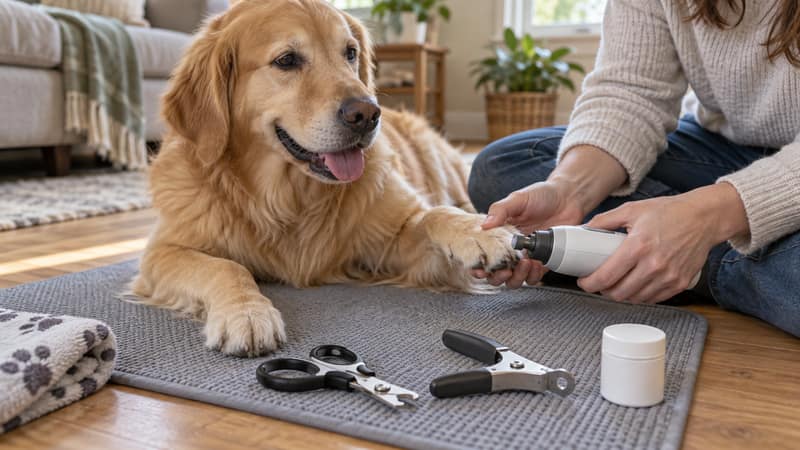 Buying guideBest dog nail clippers and grinders: how to chooseScissor clippers, guillotine clippers or a nail grinder? How to choose the best nail trimmer for your dog's size and temperament, and how to use it safely.Read article
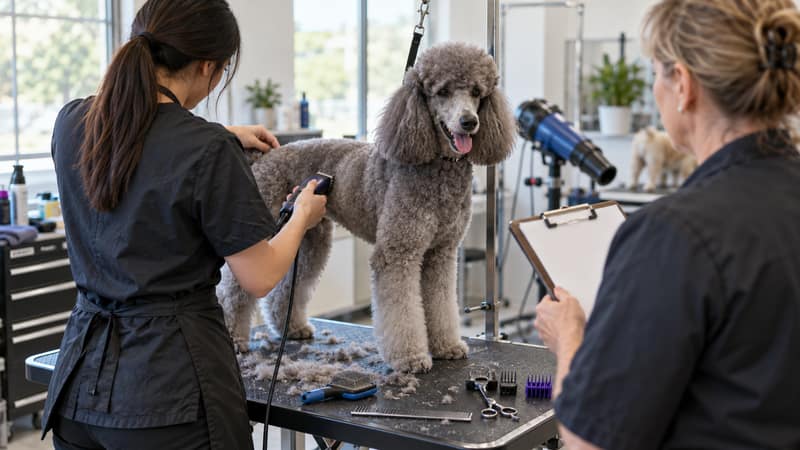 Buying guideDog grooming certification: how to get certifiedHow dog grooming certification works in the U.S. — voluntary credentials, practical and written testing, grooming school vs on-the-job training and pay.Read article
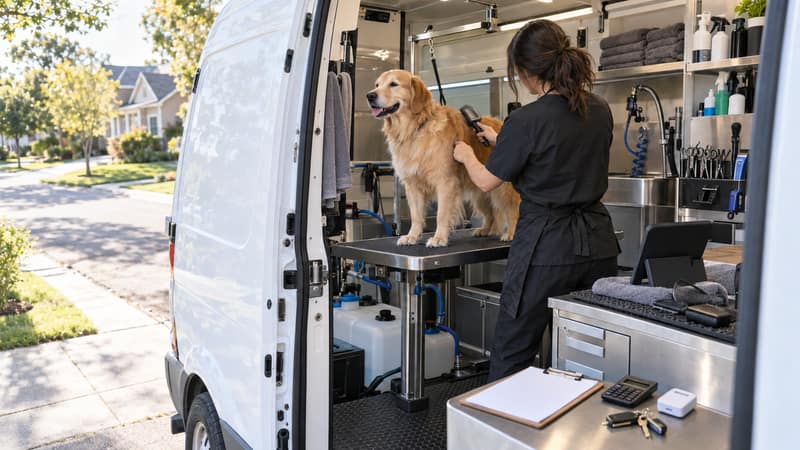 Buying guideHow to start a mobile dog grooming businessA step-by-step plan for a mobile dog grooming business — van options, startup costs to budget, licenses, pricing, scheduling, taxes and marketing.Read article
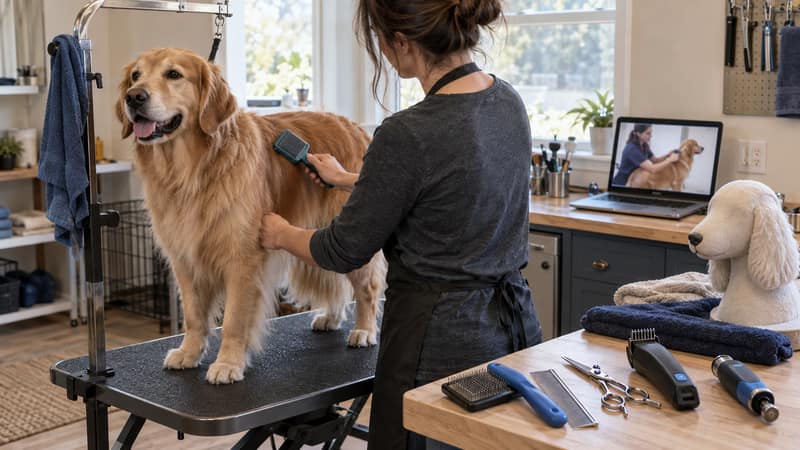 Buying guideOnline dog grooming courses: which ones are worth itWhat online dog grooming courses can and cannot teach, how to compare them, free options, costs and how to get the hands-on hours you need.Read article
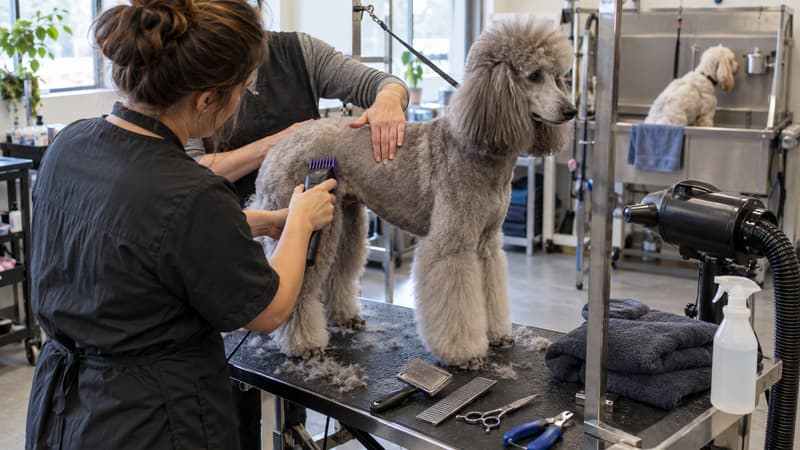 Buying guideWhat you learn in a dog grooming course (and what to skip)The skills a good dog grooming course should teach — handling, bathing, drying, clipping, breed cuts, safety and business — and how to spot a weak program.Read article
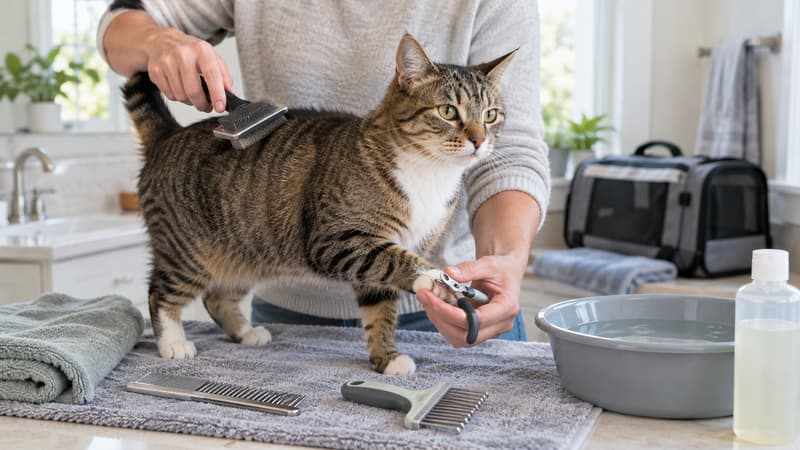 Question answeredCat grooming basics: brushing, bathing and claw careHow often to brush a cat, when a bath is actually needed, how to trim claws and handle mats — and when to leave it to a groomer or vet.Read article
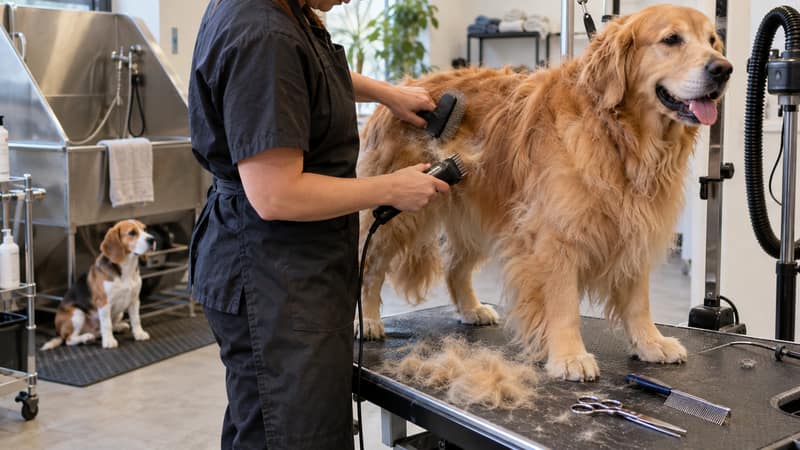 Question answeredHow much does dog grooming cost? Factors by size and breedWhat drives dog grooming prices — size, coat, matting, service type, mobile vs salon and location — how to compare quotes and how to save safely.Read article
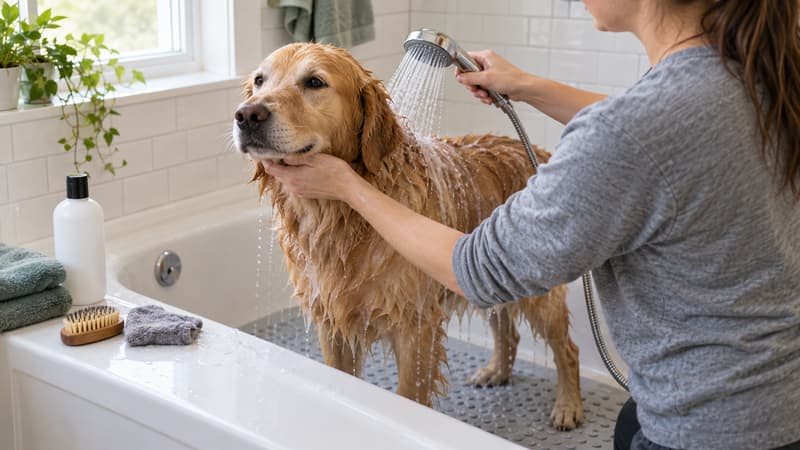 Question answeredHow to bathe a dog at home: step-by-step guideHow often to bathe a dog, what you need, and a step-by-step routine for a calm, safe bath — plus drying tips and mistakes to avoid.Read article
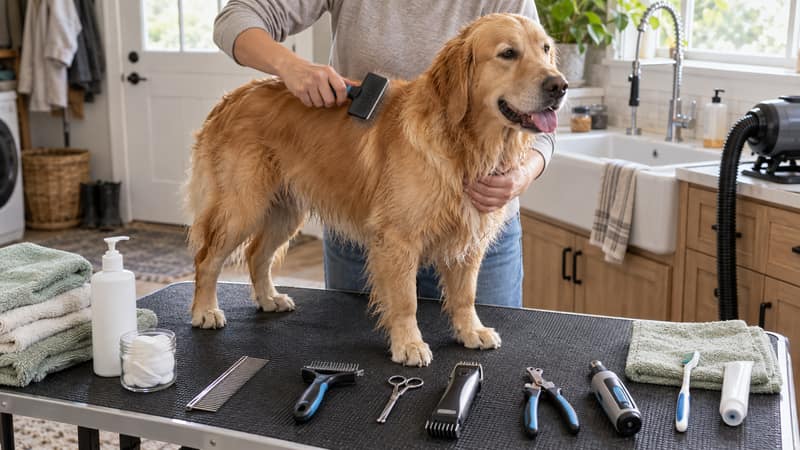 Question answeredHow to groom a dog at home: a complete beginner guideStep-by-step dog grooming at home — tools by coat type, brushing, bathing, drying, clipping, nails, ears and teeth, plus when to see a groomer.Read article
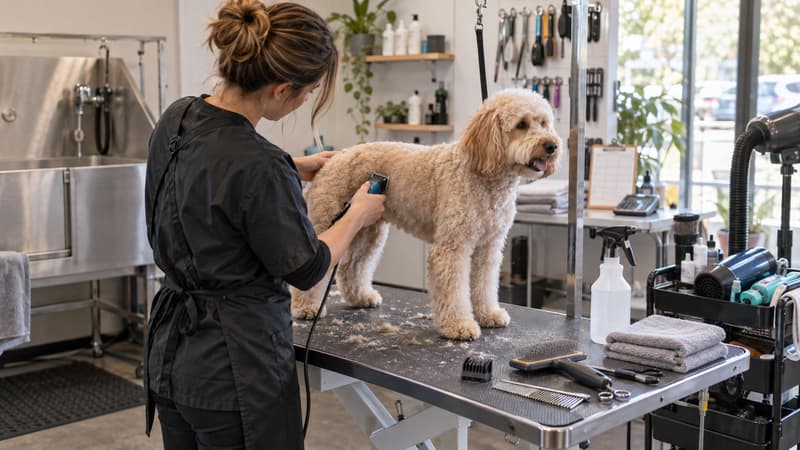 Question answeredHow to start as a dog groomer: a practical roadmapTraining routes, first jobs, tools, pricing and licenses — a realistic roadmap for starting a dog grooming career in the U.S., with BLS pay data.Read article
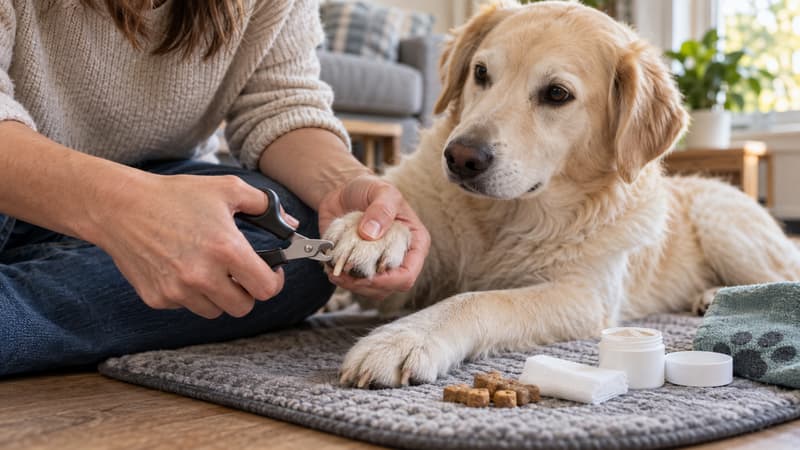 Question answeredHow to trim dog nails safely without hitting the quickWhen your dog's nails need trimming, which tool to use, how to avoid the quick, what to do if a nail bleeds and how to help a dog that hates nail trims.Read article
Complete topic guide

Grooming is health care, not just looks
Brushing, bathing, nail trims and ear checks keep a dog comfortable and let you catch problems early: lumps, parasites, skin irritation, overgrown nails. The ASPCA’s grooming tips stress that how often a dog needs each task depends on its coat, lifestyle and age, and that a calm routine matters more than a perfect result.
The core tasks
| Task | Typical frequency | Why it matters |
|---|---|---|
| Brushing | Several times a week for long coats, weekly for short | Removes dead hair, prevents mats, spreads skin oils |
| Bathing | When dirty or smelly; many dogs every few months | Clean coat without stripping natural oils |
| Nail trimming | When nails click on the floor | Long nails change posture and can split or curl |
| Ear and eye check | Weekly | Early signs of infection or irritation |
Doing it at home vs. hiring a pro
Most owners can handle brushing, baths and basic nail care with the right tools and patience. Heavy de-matting, breed-specific cuts and dogs that panic during handling are better left to a professional groomer — and any wound, lump or ear odor goes to the veterinarian.
Grooming as a career
According to the BLS, most groomers learn on the job under an experienced groomer, while grooming schools are another route. Animal caretakers, the BLS category that includes groomers, earned a median of $35,360 in 2025. Many groomers eventually go independent with a salon or a mobile van.
The guides in this section cover what a grooming course teaches, bathing, nail trims, cat grooming and how to start working as a dog groomer.
Related topics
- Dog training: humane methods, basics and finding helpPositive reinforcement, puppy socialization, teaching sit and choosing a trainer — guidance grounded in AVSAB and RSPCA positions.
- Veterinary assistant: what the job is and how to startWhat a veterinary assistant does, how to get hired, how the role differs from a vet tech, what it pays and whether a course is worth it.