Topic
First aid for dogs and cats: what to do in an emergency
Quick answer
First aid for dogs and cats is what you do in the minutes before veterinary care: keep yourself safe, stabilize the animal and get to a clinic fast. The AVMA stresses that first aid never replaces treatment. Call your vet or an emergency clinic on the way, and for suspected poisoning contact the ASPCA Animal Poison Control Center at (888) 426-4435. Do not give human medicines or induce vomiting unless a professional tells you to.
Articles on this topic
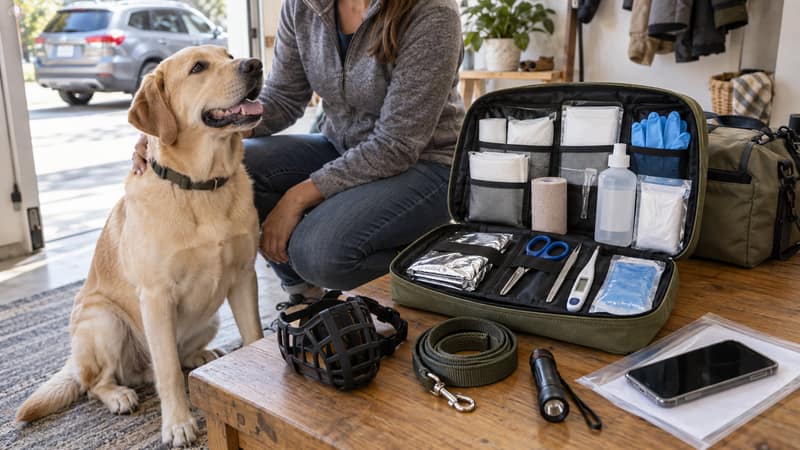 Buying guideDog first aid kit: complete checklist for home and travelWhat to put in a dog first aid kit — bandages, tools, documents and emergency numbers — what to leave out, how to store it and when to go to the vet.Read article
 Question answeredDog choking: what to do, step by stepHow to tell if your dog is choking, how to remove the object safely, back blows and chest thrusts by size, what to avoid and what changes for cats.Read article
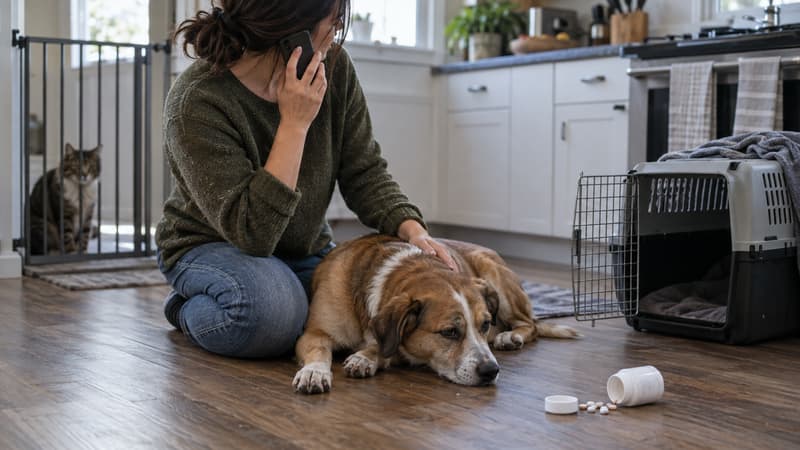 Question answeredDog poisoning: what to do right nowSigns of poisoning in dogs and cats, the first steps to take, why you should not induce vomiting on your own and what to tell poison control.Read article
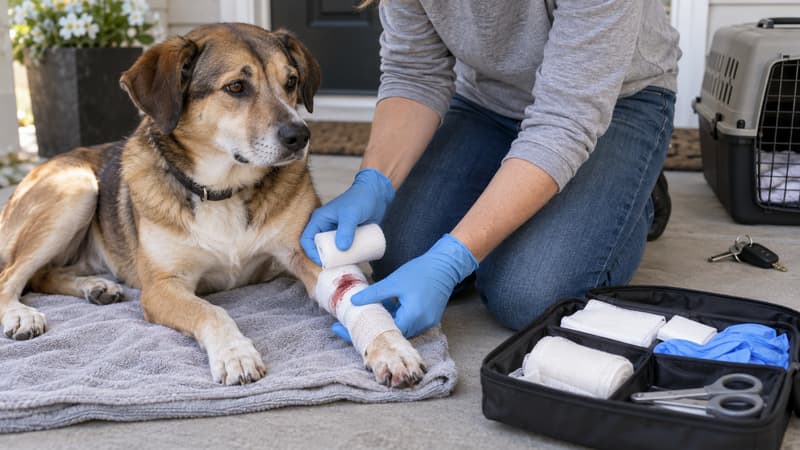 Question answeredDog wounds and bleeding: first aid until you reach the vetHow to control bleeding in a dog or cat, how to bandage for transport, which wounds need a vet and what not to put on a wound.Read article
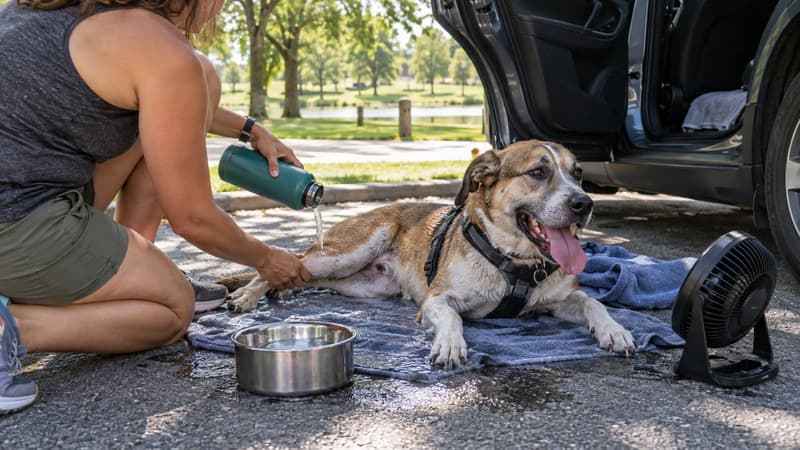 Question answeredHeatstroke in dogs: signs, first aid and preventionHow to recognize heatstroke in dogs, how to cool a dog safely on the way to the vet, which dogs are most at risk and how to prevent it.Read article
 Question answeredToxic foods for dogs and cats: the ASPCA list explainedWhich human foods are dangerous for dogs and cats according to the ASPCA, why they cause harm, and what to do if your pet eats one.Read article
Complete topic guide

First aid buys time — it does not replace the vet
Pet first aid is what you do between noticing an emergency and reaching veterinary care. The AVMA’s first aid tips make the point clearly: first aid is never a substitute for treatment, but it can save a life on the way to the clinic. The Merck Veterinary Manual for pet owners starts every emergency with the same rule: protect yourself first, because a frightened animal in pain may bite.
Numbers to save today
- Your regular veterinarian and the nearest 24-hour emergency clinic.
- ASPCA Animal Poison Control Center: (888) 426-4435, open 24/7 (a consultation fee may apply), per the ASPCA.
The common emergencies
| Emergency | First move |
|---|---|
| Choking | Look for the object, remove it only if visible, then chest thrusts or back blows |
| Poisoning | Remove the source, call poison control, do not induce vomiting on your own |
| Heatstroke | Move out of the heat, cool with cool water or wet towels (no cold-water immersion), go to the vet |
| Toxic food eaten | Note what and how much, call poison control or the vet right away |
| Bleeding | Firm direct pressure with a clean cloth, then the clinic |
A basic kit
Gauze, a roll bandage, adhesive tape, a clean towel, a muzzle or soft cloth to make one, a digital thermometer, a flashlight, saline and your vet’s phone number. Keep one at home and one in the car.
The guides in this section walk through each emergency step by step.
Related topics
- Dog training: humane methods, basics and finding helpPositive reinforcement, puppy socialization, teaching sit and choosing a trainer — guidance grounded in AVSAB and RSPCA positions.
- Veterinary assistant: what the job is and how to startWhat a veterinary assistant does, how to get hired, how the role differs from a vet tech, what it pays and whether a course is worth it.