Topic
Tilapia farming and aquaponics for small producers
Quick answer
Tilapia are warm-water fish that grow well in ponds, tanks and aquaponics systems when water stays warm, oxygen is high and feed is managed carefully. UF/IFAS Extension notes that tilapia tolerate a wide range of conditions but stop growing in cool water and die in cold winters, so most U.S. growers need heated tanks or a seasonal pond cycle. Feed is usually the largest cost, so track feed conversion and survival from the start.
Articles on this topic
Complete topic guide

Why tilapia
Tilapia are among the most widely farmed fish in the world because they grow fast on prepared feed, tolerate crowding and accept a broad range of water quality. The UF/IFAS reference profile on hybrid tilapia describes them as warm-water fish: growth slows sharply when water cools, and cold winters kill them, which is why most U.S. producers use heated tanks, greenhouses or a summer pond season.
Three ways to raise them
| System | How it works | Main challenge |
|---|---|---|
| Pond | Seasonal grow-out in warm months | Winter, predators, oxygen at night |
| Tanks (recirculating) | Year-round, high density, filtered water | Equipment, power and filtration costs |
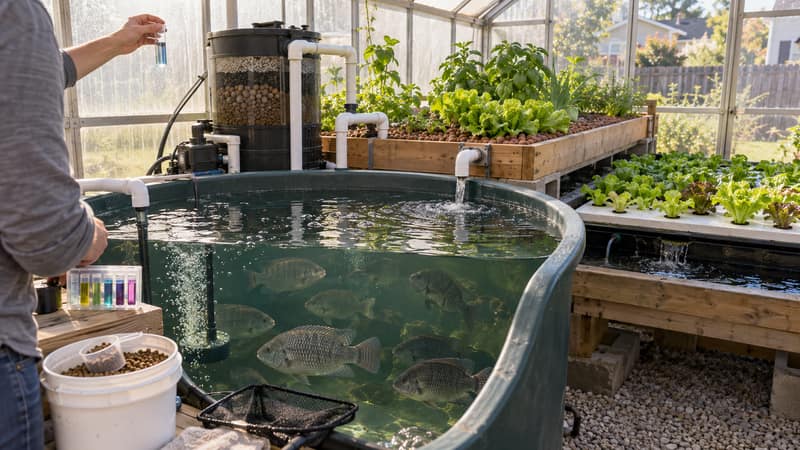
| Aquaponics | Fish waste feeds plants grown in the same water loop | Balancing fish, bacteria and plants |
What drives the cost per pound
- Feed is usually the largest expense, so feed conversion ratio (pounds of feed per pound of fish) decides profit.
- Survival — every fingerling lost is feed and money already spent.
- Energy for aeration, pumps and heating in tank and aquaponics systems.
- Market and permits. Many states regulate the sale and even the possession of live tilapia; check with your state agriculture or wildlife agency before stocking.
Planning tool
The Tilapia Cost & Production Calculator works from pond area and target yield to fingerlings, feed, aeration and cost per pound, with presets based on Southern Regional Aquaculture Center fact sheets.