Topic
Horse care: hooves, colic and everyday management
Quick answer
Good horse care rests on a few habits: forage-based feeding with clean water always available, hooves picked out daily and trimmed or reset by a farrier on a regular cycle, routine dental and deworming plans set with your veterinarian, and knowing the early signs of colic so you call the vet before a treatable problem becomes an emergency.
2 articlesUpdated on
Articles on this topic
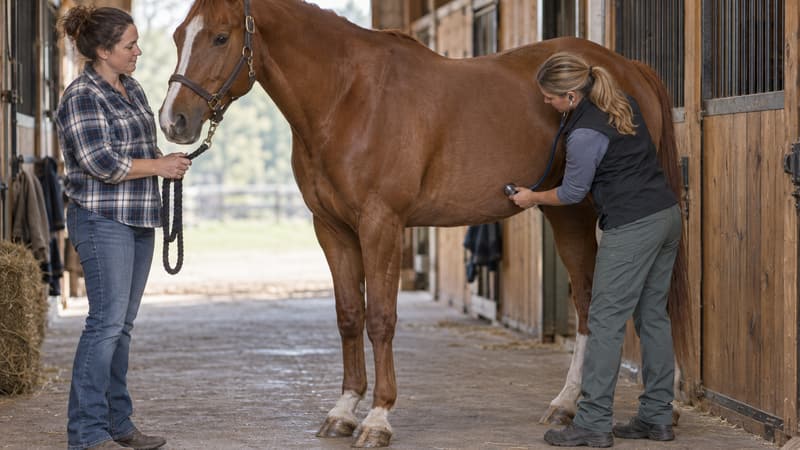 Question answeredHorse colic: what to do until the vet arrivesHow to recognize colic in horses, what to do and avoid while you wait for the vet, which vital signs to record and how to lower the risk of another episode.Read article
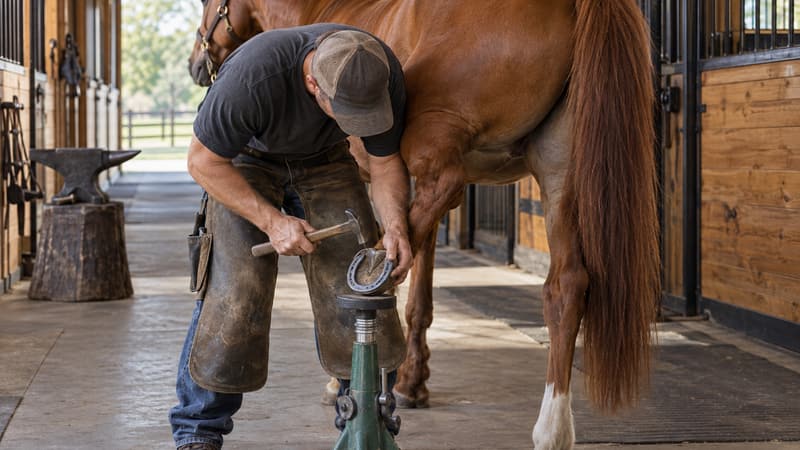 Question answeredHorse hoof trimming and shoeing: how often and what to expectHow often to trim or shoe a horse, what a farrier does step by step, barefoot vs. shod, daily hoof care for owners and the warning signs that need a vet.Read article
Complete topic guide

The basics every horse owner manages
| Need | What it means in practice |
|---|---|
| Forage | Hay or pasture as the base of the diet, available most of the day |
| Water | Clean and always available, including in winter |
| Hooves | Picked out daily; trimmed or reset by a farrier on a regular cycle |
| Teeth and parasites | Routine dental checks and a deworming plan set with your veterinarian |
| Turnout and company | Horses are herd animals and need movement and social contact |
Utah State University Extension’s hoof care guide puts most shod horses on a 6 to 8 week reset cycle, and the Merck Veterinary Manual lists the behaviors that signal colic, the most common equine emergency.
In this section you will find guides on hoof trimming and shoeing and on what to do when a horse shows signs of colic.