Topic
Beekeeping for beginners
Quick answer
Beekeeping starts with learning and local rules, then a standard hive, protective gear and a package or nucleus colony in spring. In the first year the goal is a healthy colony that survives winter, not a large honey harvest. Inspect regularly in the active season, make sure bees have enough food and space, and monitor varroa mites monthly — Penn State Extension describes the alcohol wash as the best monitoring method.
Articles on this topic
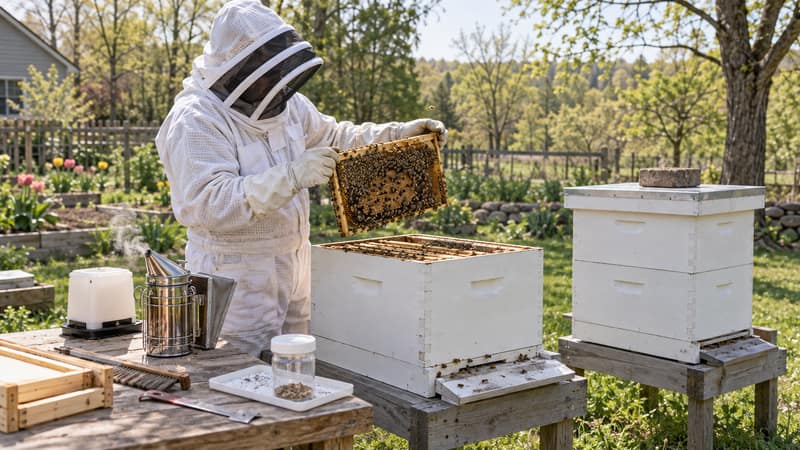 Buying guideBeekeeping for beginners: a first-year planHow to start beekeeping — local rules, Langstroth hive parts, starter kit, bee suit, inspections, varroa mite monitoring and a season-by-season plan.Read article
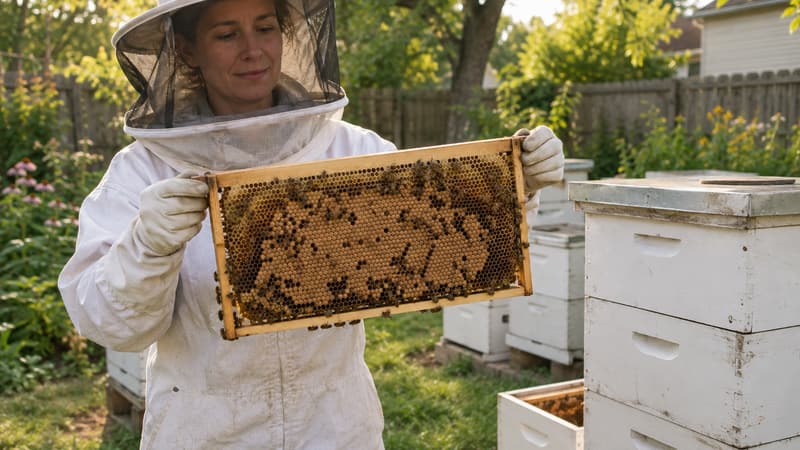 Question answeredLangstroth hive dimensions: boxes, frames and bee spaceStandard Langstroth hive dimensions for 10- and 8-frame equipment — deep, medium and shallow box heights, frame sizes, outside measurements and bee space.Read article
Complete topic guide

What a new beekeeper needs
| Item | Why |
|---|---|
| Training or a local club | Hands-on help in the first seasons |
| Standard hive (often Langstroth) | Removable frames for inspections |
| Veil, jacket or suit, gloves | Safety and confidence |
| Smoker and hive tool | Calm bees, open boxes |
| Package or nucleus colony | Your bees |
| Mite monitoring supplies | Varroa control starts with counting |
The first-year priority: a healthy colony
Penn State Extension’s Beekeeping Basics covers colony biology, equipment, apiary selection, seasonal management, pests and diseases and honey production. Its alcohol wash guide explains why monitoring varroa mites monthly — and recording results before and after treatment — is essential.
Before you start
Check city rules, homeowners’ association restrictions and state apiary registration, and talk to neighbors about water sources and flight paths.